
From the Sensex firms, Eternal, Mahindra & Mahindra, Maruti, Bajaj Finance, Tata Steel, Bharti Airtel, Bajaj Finserv, Asian Paints, Power Grid and State Bank of India were among the laggards. Kotak Mahindra Bank, Axis Bank, Titan, HCL Tech, Tata Motors, Infosys and Tata Consultancy Services were the gainers.
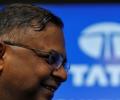
S&P Global Ratings on Thursday upgraded ratings of five companies of the Tata group including Tata Steel, Tata Motors and Jaguar Land Rover (JLR) reflecting its reassessment of the ongoing influence and the potential for 'extraordinary financial support' from the parent, Tata Sons. Under the revised exercise, S&P Global said ratings on Tata Steel Ltd and its 100 per cent-owned financing subsidiary ABJA Investment Co Pte Ltd have been upgraded to 'BBB-' from 'BB' with stable outlook. Similarly, Tata Motors Ltd and its wholly-owned arm TML Holdings Pte Ltd have been upgraded to 'BB-' from 'B' ratings with stable outlook.
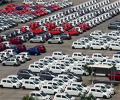
Passenger vehicle sales are expected to experience muted growth in the current financial year.
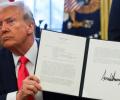
Industry insiders in India warn that any such move in the pharmaceutical sector could be counterproductive for the US as it may face increased drug shortages if tariffs are imposed on such imports.

Maruti Suzuki India (MSIL) said on Thursday its operations are unaffected by the global rare earth magnet shortage, but added that the situation is "uncertain and evolving". The firm said it is exploring multiple solutions to maintain continuity in operations and will notify stakeholders in case of material impact.

Sun Pharma, Tata Steel, State Bank of India, Axis Bank, Tata Motors, Larsen & Toubro and ICICI Bank were also among the Sensex gainers. HCL Tech, UltraTech Cement, Nestle and Hindustan Unilever were among the laggards.

Hyundai Motor India Ltd has become the country's fifth most valuable auto firm by market valuation in its debut trade on Tuesday. Shares of Hyundai Motor India Ltd, the Indian arm of South Korean automaker Hyundai, listed at Rs 1,931, reflecting a decline of 1.47 per cent against the issue price of Rs 1,960 on the BSE earlier in the day. The stock slumped 7.80 per cent to Rs 1,807.05 during the day and finally ended at Rs 1,820.40 apiece, down 7.12 per cent.
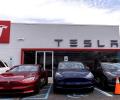
Risks emerging from the US have left automotive investors worried. US President Donald Trump has announced 25 per cent tariffs on automotive imports, while global electric carmaker Tesla has taken its first steps towards entering India. While these developments are sentimentally negative for related stocks, it may be too early to conclude the eventual impact, analysts said.
From the 30-share pack, Bajaj Finserv, Mahindra & Mahindra, Eternal, Power Grid, ITC, Tata Motors, Asian Paints and Hindustan Unilever were among the gainers. Among the laggards, Kotak Mahindra Bank tanked 4.57 per cent
All Sensex shares, except for Hindustan Unilever, ended with losses. Tata Steel fell the most by 7.33 per cent followed by Larsen & Toubro which cracked 5.78 per cent. Tata Motors, Kotak Mahindra Bank, Mahindra & Mahindra, Infosys, Axis Bank, ICICI Bank, HCL Technologies and HDFC Bank were the other big laggards. Hindustan Unilever ended marginally higher.

Tata Technologies Ltd is all set to acquire a UK-based INCAT International Plc.

'Bilateral trade has suffered seriously because of the growing unrest.' 'There is a standstill on both sides amid the curfew.'

From the Sensex basket, Sun Pharma, Maruti, IndusInd Bank, Titan, ITC, Tata Motors, Larsen & Toubro and JSW Steel were the major gainers. On the other hand, Infosys, Wipro, HCL Technologies, Tata Consultancy Services, Tech Mahindra and Bajaj Finserv were among the laggards.

Sluggish urban demand, a high base effect, and weak sales of hatchbacks and sedans weigh down passenger vehicle sales in FY25.

Leading automakers Maruti Suzuki, Hyundai and Tata Motors reported decline in wholesales in August as the companies curtailed vehicle dispatches amid drop in demand and to cut inventories at dealer level. Market leader Maruti Suzuki India said its total domestic passenger vehicle wholesales were at 143,075 units last month as compared to 156,114 units in the year-ago month, registering a dip of 8 per cent. Sales of mini segment cars, comprising Alto and S-Presso, declined to 10,648 units last month as against 12,209 units a year ago.
Siam argues that a 2040 ban could destabilise ongoing and future investments and threaten millions of jobs in the automotive value chain.
Higher price tag and soaring fuel costs have swayed buyers away from the ultra compact car over the months.

From setting up cutting-edge facilities to cater to the domestic market and building capabilities of global standards, the action is building up.
Hindustan Motors Limited of C K Birla group will launch multi-utility vehicle manufactured at its Uttarpara plant in the state.

Auto majors report positive sales figs for November.
Minutes after reports emanating from West Bengal indicated that the Singur impasse had finally come to an end with Tata Motors 'agreeing to give land,' the Tatas have expressed distress at the 'limited clarity on the outcome of the discussions between the state government of West Bengal and the representatives of the agitators in Singur.

The demand for buses largely remained robust in 2023, driven by the increasing need for public mobility and replacement. Ashok Leyland Limited (ALL) recorded a 64 per cent year-on-year increase in sales of medium and heavy commercial vehicle (MHCV) buses during the April-to-December period of 2023 to 11,216 units. Volvo Eicher Commercial Vehicles (VECV) posted 24.7 per cent sales growth between April and December for light and medium-duty buses, and 36.9 per cent growth for heavy-duty buses.

Auto manufacturers have focused on launching CNG variants of their popular models to meet consumer demand for vehicles with lower running costs.

Japan is expected to increase its investment target in India from the earlier 5 trillion yen ($34 billion) to almost 10 trillion yen.

From the Sensex basket, Bajaj Finance, Mahindra & Mahindra, HDFC Bank, JSW Steel, Maruti, Wipro, Bharti Airtel, Bajaj Finserv, ICICI Bank and ITC were the major gainers. Nestle India, HCL Technologies, Larsen & Toubro, Tata Consultancy Services, Tata Motors and Infosys were among the laggards.

Investors became richer by nearly Rs 8 lakh crore on Wednesday as benchmark BSE Sensex surged by 740 points amid value buying in utilities and power shares and a strong trend in global markets. The 30-share BSE Sensex surged by 740.30 points or 1.01 per cent to close at 73,730.23.

'Interim Budget has ignited the entrepreneurial spirit.'

This measure will ensure that the price of a scrip cannot move upward or downward beyond a limit set for the day.

Reserve Bank of India on Thursday said 15 large NBFCs, including LIC Housing Finance, Bajaj Finance, Shriram Finance and Tata Sons, will be subject to enhanced regulatory requirements. The central bank has categorised NBFCs into Base Layer (NBFC-BL), Middle Layer (NBFC-ML), Upper Layer (NBFC-UL) and Top Layer (NBFC-TL). A list of 15 large Non Banking Finance Companies (NBFCs) falling in the Upper Layer category has been released.
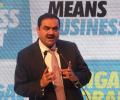
Two firms belonging to the Adani group - India's most valued conglomerate - are part of the Nifty 50 index. The group, however, has no representation in the Sensex. And it could stay this way if a proposed index qualification rule change gets approved. Recently, Asia Index, a joint venture between S&P Dow Jones Indices and BSE responsible for index composition, floated a consultation paper where it proposed that a stock must have a derivative contract to be eligible for inclusion in the flagship 30-share Sensex index.

South Korean carmaker Kia was on Tuesday declared the top mass-market performer in the overall customer experience index (CEI), an annual survey done by the Federation of Automobile Dealers Associations (Fada) to assess and quantify customer experience across 97 parameters related to sales, product, and after-sales quality. Fada conducted this survey in collaboration with consulting firm Frost & Sullivan, with a sample size of 8,685 respondents.

Among the Sensex firms, JSW Steel, Tata Motors, Tata Steel, Tata Consultancy Services, NTPC, Wipro, HCL Technologies, State Bank of India, Larsen & Toubro, UltraTech Cement, IndusInd Bank, Kotak Mahindra Bank, Power Grid and Reliance Industries Limited were the major laggards. Mahindra & Mahindra and Bajaj Finance were the gainers.

Lithium-ion cells, primarily imported from China, are likely to become cheaper following punitive tariffs imposed by the US on Chinese battery cells.

From the Sensex pack, ICICI Bank, State Bank of India, Larsen & Toubro, Maruti, Tata Steel, Kotak Mahindra Bank, Bajaj Finance, Nestle, Power Grid and HDFC Bank were the major gainers. Jio Financial Services, Bharti Airtel, Tata Motors, Tech Mahindra, ITC, UltraTech Cement and Mahindra & Mahindra were among the laggards.
Corporate India is starting to step up its capital expenditure plans amid government incentives and signs of rising demand, company executives and analysts have indicated. This coincides with the Reserve Bank of India (RBI) recently citing a double-digit growth in private capital expenditure. Healthy balance sheets of banks and corporates, along with increasing capacity utilisation and improving business sentiment, are contributing to a favourable environment for sustained growth in private sector investments, the RBI said in its policy last week.

The managing directors -- Rana Sinha of Tata Hitachi Construction Machinery Company, Dibyendu Bose of TM International Logistics Limited, Sandipan Chakravortty of Tata Steel Processing and Distribution Limited, Viresh Oberoi of mjunction, and Sanjiv Paul of Tata Metaliks -- met at Nabanna, the makeshift state secretariat. Finance and industry minister, Amit Mitra, was also present.

Reliance Industries, the Tata group, Bharti Airtel and Aditya Birla are among Indian conglomerates that have hedged their revenue and costs linked to the US dollar, giving them financial cover as the rupee fell past 80 against the greenback on Tuesday.

Arun Maira who worked for 25 years with the Tata Group, remembers his early years with Ratan Tata.

From the Sensex pack, Tata Consultancy Services, Reliance Industries, NTPC, Bharti Airtel, Power Grid, Larsen & Toubro, HDFC Bank, Kotak Mahindra Bank, Tech Mahindra and HDFC were the major laggards. Maruti, Tata Motors, Titan, UltraTech Cement, Bajaj Finserv, Mahindra & Mahindra, State Bank of India and IndusInd Bank were the biggest gainers.
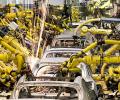
The sharp increase in commodity prices on account of the Russia-Ukraine war has put automakers in a fix. After the frequent price hikes in the current fiscal, manufacturers fear that any more price increases may further dent the already weak demand in certain segments. "We have taken several hikes and cannot immediately do it again. "We will have to closely watch the situation and act accordingly," said an official at an auto firm, declining to be identified. Even for companies like Tata Motors Passenger Vehicles, which has had a strong volume run and a robust order book, passing on the entire costs has been tough.
